- Do Something Newsletter
- Posts
- 📦 Turning Smaller Spaces Into Bigger Returns with Microunit
📦 Turning Smaller Spaces Into Bigger Returns with Microunit
Where rarity creates opportunity

Dami Fadipe
December 30, 2025

Happy Tuesday, Do Something readers! We hope your holidays have been safe and enjoyable. 2026 will be a great year.. Some incredible opportunities are already surfacing. Until then…. let’s keep educating one another.
Last week, we kicked off this series with ADUs and how to add one more door on the same piece of dirt.
This week, we are moving inside the building and looking at a strategy that has quietly reshaped a lot of urban markets:
Microunits.
If you have ever walked a building and thought, “These units are huge for this location,” or “We could carve one more unit out of this floor,” microunits might be your play.
In this issue we will cover:
What microunits are and why landlords use them
How microunits can improve rent per square foot and total income
Real world style examples of microunit conversions and new builds
Design and livability principles that keep residents happy
Risks, trade offs, and when microunits make sense
🧱 What is a microunit, really?
Definitions vary by city, but in practice a microunit is:
A small, self-contained apartment that is intentionally designed to be compact and efficient, often in the 250 to 450 square foot range.
Most microunits are:
Studio or junior one bedroom
Located in walkable or transit rich locations
Paired with strong building amenities or neighborhood amenities
From a landlord’s perspective, the core idea is simple:
Smaller private spaces that lease for less total rent than a larger unit, but at a higher rent per square foot and often with more total doors in the same building.

💰 Why landlords like microunits
Microunits can be powerful in the right context because they:
Increase the number of units you can fit in a building
Often achieve higher rent per square foot than conventional units
Attract tenants who care more about location and lifestyle than size
Provide more diversification of income (many smaller units instead of a few large ones)
If the building and location are right, this can translate to:
Higher total rent on the same envelope
Better risk spreading across more leases
A more attractive exit story for buyers who want stable, bite-sized units
📊 Example 1: Converting large one bedrooms into microunits
For many years I worked at JP Morgan at 4 New York Plaza. While I preferred to live in North New Jersey, several of my coworkers preferred the city life and so they lived in tiny spaces in New York City. In many cases, their landlords lived across the hall from them as well, in what was basically a split unit.
Here is a simplified conversion example that reflects what a lot of urban owners face.
You have a small building with:
4 large one bedroom units
Each is 750 square feet
Each rents for 1,900 per month
Total monthly rent today:
4 units x 1,900 = 7,600
You bring in a designer and contractor and reconfigure each floor:
Instead of 4 large one bedrooms, you create 6 microunits
Each microunit is about 450 square feet
Each microunit rents for 1,500 per month
Now, post conversion:
6 units x 1,500 = 9,000 per month
You have:
Increased total monthly rent by 1,400
Added two more doors, which spreads vacancy risk
Created smaller, more affordable entry points for renters who want the location but not a big unit
From a rent per square foot perspective:
Before: 1,900 on 750 sq ft is about 2.53 per sq ft
After: 1,500 on 450 sq ft is about 3.33 per sq ft
You still need to weigh:
Construction cost
Lost rent during renovation
Higher ongoing turnover or management complexity
But you can see how microunits can unlock income in a building that is “over sized” relative to the renter pool.
🏙️ Example 2: Ground up microunit building in a prime location
Now imagine a ground up infill site in a walkable, job rich area.
Option A: Conventional units
30 standard one bedroom units at 650 sq ft
Average rent per unit: 2,200
Total monthly rent: 66,000
Option B: Microunit strategy
40 microunits at 400 sq ft
Average rent per unit: 1,850
Total monthly rent: 74,000
Under Option B you have:
10 more leases spreading risk
Lower individual rents that may be more affordable in an expensive market
Higher total income and a story that appeals to the “attainable housing” narrative
On a per square foot basis, the microunits are again doing more work.
As a landlord or sponsor, you still underwrite construction cost, operating cost per unit, and leasing assumptions, but this illustrates how microunits can increase income on the same site.
🛋 Design rules that make microunits livable, not cramped
Microunits work when they feel smart and intentional, not like someone chopped up a building to squeeze rent.
There are a few design rules that show up in successful microunit projects:
Light and volume are non negotiable
Large windows for daylight
Higher ceilings where possible
Simple sightlines so you see across the whole unit when you walk in
Built in storage
Floor to ceiling wardrobes
Storage above kitchens, bathrooms, or beds
Hooks, shelves, and niches that reduce the need for bulky furniture
Multi use zones
A single area that can function as living, working, and sleeping with a Murphy bed or convertible sofa
Built in desks or ledges that double as dining and work space
Efficient kitchens and bathrooms
Two burner cooktops, smaller but quality appliances
Thoughtful layout that allows one person to use the space comfortably without wasted steps
Strong building level amenities
Shared lounges, co working areas, roof decks, bike storage, fitness rooms
Laundry rooms if in unit laundry is not feasible
The idea is that residents accept a smaller private box because the building and neighborhood offer extended living space.
👥 Who actually rents microunits?
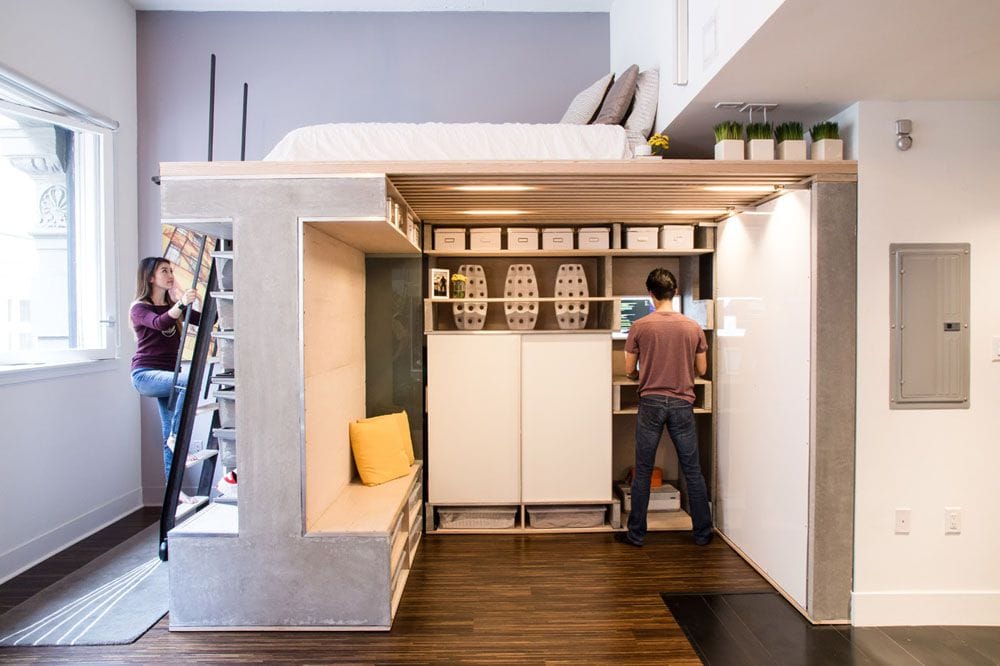
Microunits tend to appeal to:
Young professionals who value location and walkability
People in life transitions - first job, new city, post breakup, short term work assignment
Students and medical staff near universities or hospitals
Commuters who need a city base during the week
What they often have in common:
They prefer a lower all in rent in a prime location over a bigger place in a secondary location
They are willing to trade storage and private space for lifestyle and convenience
They often stay one to three years, then “graduate” into a larger unit or home
From a landlord lens, this means:
Leasing velocity can be strong if you hit the right rent point
Turnover may be slightly higher, so systems and management need to be dialed in
Marketing should emphasize experience, convenience, and community, not square footage
⚠️ Risks and trade offs you need to respect
Microunits are not a magic solution. A few key risks:
Regulation and minimum unit sizes
Many cities have minimum unit size rules or specific microunit guidelines. You cannot simply draw tiny boxes and expect approval. Always check local code.Overestimating rent or demand
Just because small units downtown get high rent per square foot does not mean every neighborhood will support that. You need real comp data for studios and small units in your submarket.Higher management intensity
More units mean more leases, more maintenance calls, and potentially more turnover. Your property management needs to be competent and adequately staffed.Noise and privacy complaints
Smaller units in closer proximity can generate more noise issues if sound insulation is not done well. Spend the money on good walls and doors.Lender and appraiser perception
Not every lender or appraiser is comfortable with a building full of very small units. Some may discount the asset or require a stronger track record. This is improving but still worth considering.
🧭 When microunits make sense for your strategy
Microunits tend to work best when:
Land and location are the main value driver
There is strong demand from singles, students, or young professionals
The neighborhood has built in amenities - cafes, gyms, transit, parks
You can design for quality, not just quantity
You have management in place that can handle higher unit counts
They may be less suitable if:
Your market is family heavy and everyone wants multiple bedrooms
Zoning is restrictive and anti density
Construction costs are very high while rents are relatively low
You or your manager are not set up for a more operationally intensive building
📌 So think about this:
Microunits are not about squeezing people into boxes. They are about right sizing units for renters who prioritize location and price point over raw square footage.
Done well, microunits can increase total income, improve rent per square foot, and spread risk across more doors.
The success of a microunit strategy lives and dies on design quality, tenant profile, and location. Poorly designed small units in the wrong area will sit.
In the next part of this newsletter series, we will move into redevelopments and how to reposition tired properties into resilient, income producing assets that are set up for the next cycle.
If you have a building you are considering for a microunit or redevelopment plan, reply to this email with a short summary. We may turn a version of it into an anonymized case study in a future issue. Who knows!
🙏🏾 Thanks for reading!
Stay in the loop with us! If you’ve received this newsletter from someone else, subscribe here.
Stay blessed and Do Something!
— Dami Fadipe